When I was teaching at an alternative school in the Chicago area, I was told that every classroom was required to develop a Service Learning project for the year. I remember feeling immediately overwhelmed. I didn’t really know what service learning entailed, and it felt like just one more thing to implement with a group of students who already struggled to attend to the existing curriculum.
Other classrooms seemed to have it figured out. One group was building homes for butterflies migrating south—something I didn’t even know was a thing. Another was making blankets for dogs at the Humane Society. Both were thoughtful, creative, and inspiring.
My class? We struggled.
I’ve always had a strong connection to Africa, and my students knew that. It came out often because each year I taught, I also wrote a grant that involved therapeutic drum circles, using a djembe drum, which are from Africa. A close friend of mine who lives in South Africa organizes trips across the continent for tourists—safaris, luxury resorts, and cultural experiences. Through her, I learned about a school in Botswana that desperately needed basic school supplies.
I brought the idea to my students…and honestly, they could not have cared less.
Getting buy-in felt like pulling teeth. But slowly—very slowly—each student found their way into the project.
One student, an incredibly talented artist, designed a logo that we printed on t-shirts and sold. Another suggested making and selling mini pizzas during lunch. Given that school lunch was minimal and pretty terrible, this turned out to be a great idea. Someone else pointed out that students loved Kool-Aid, so we sold water bottles with Kool-Aid packets to mix in.
What unfolded was something much bigger than fundraising.
Students worked together to create signs, manage shirt orders, cook pizzas, deliver food, collect money, track inventory, and organize sales. Day after day, they showed up for the routines and responsibilities tied to the project.
In the end, we raised a few hundred dollars. Not a huge amount—but for the size and population of the school, it was significant. And in Botswana, U.S. dollars went a long way.
When the project ended, something unexpected happened: the students were sad. They missed the daily responsibilities. They missed having something meaningful to do together.
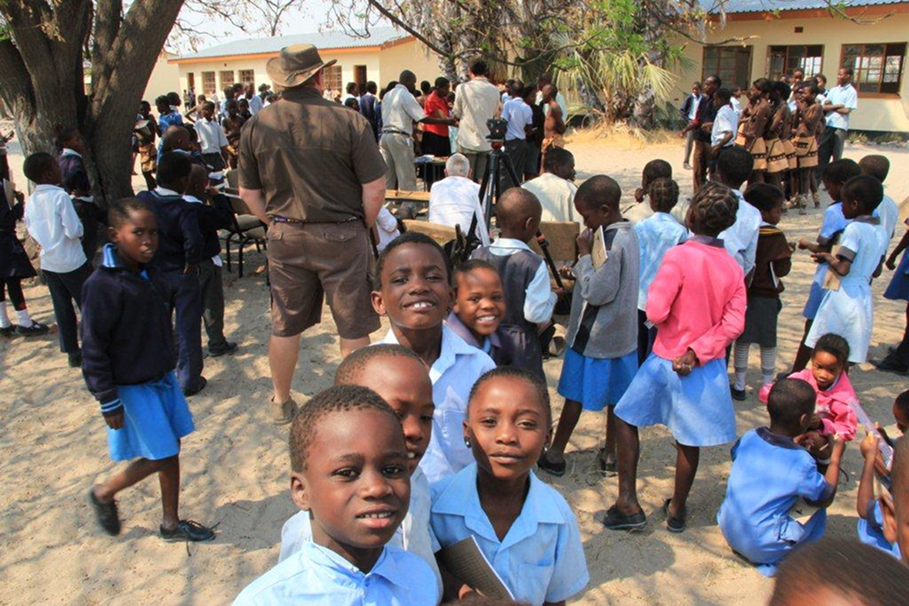
A few months later, we received a photo from the school in Botswana. It showed their students performing a ceremonial dance of appreciation and holding the materials they were able to purchase because of my students’ efforts.
When I showed the photo to my class, I didn’t get a loud reaction. No cheering. No big display.
But I saw it in each of them.
Quiet pride.
A sense of empowerment.
An understanding that they mattered.
Years later, some of those students still keep in touch with me and talk about their desire to travel to Africa. That project meant more to them than any of us realized at the time.
Looking back, the skills they learned were immeasurable.
They learned:
The value of helping others without expecting anything in return
About another country and people living very different lives
That their work had real-world impact
How to collaborate as a team
How to manage money, inventory, and orders
That their creativity and ideas were valuable
Advertising, customer service, and communication skills
How to take safe risks and step outside their comfort zones
And that’s just the surface.
Too often, service learning in schools becomes a one-off winter project. The real challenge—and the real opportunity—is creating experiences that are ongoing, interest-based, and experiential.
The most impactful projects are built around students’ strengths and curiosities. Examples might include:
Designing and facilitating games at a nursing home
Partnering with a farm to exchange work for equine therapy
Filming and acting out social stories for younger students
Collaborating with elementary schools to create videos of social stories
Service learning isn’t just about giving back—it’s about helping students discover their capacity, their value, and their place in the world.